

Table of Contents
Mathematical Foundations of Machine Learning: The Core Building Blocks
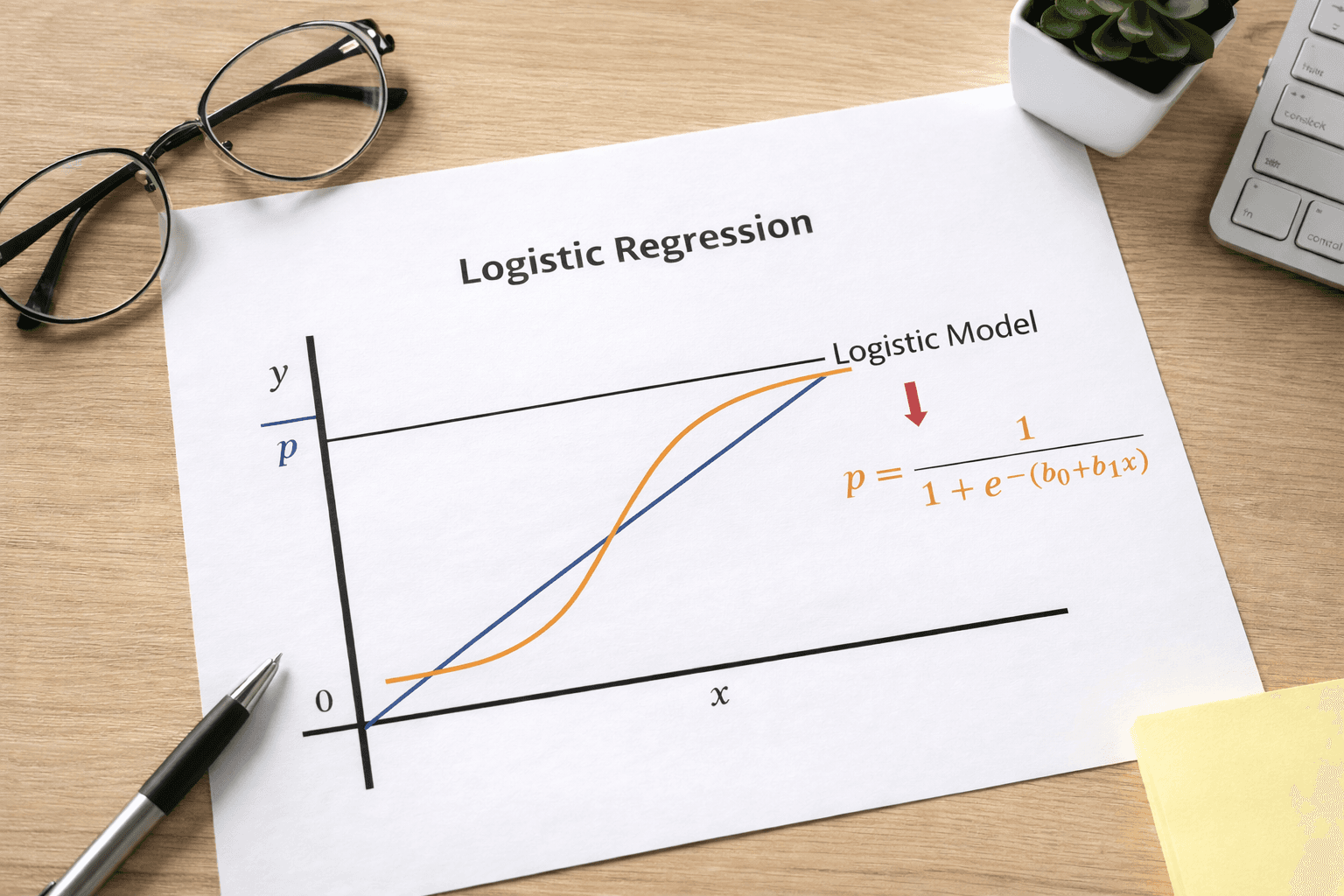
Machine learning fundamentally draws from mathematics, which provides the framework and rationale for algorithms to learn from data. Mathematical ideas are involved in almost every part of a machine learning pipeline, including data representation and model optimization. These foundations allow models to discover patterns, manage uncertainty, and enhance performance through systematic learning. Understanding these core building blocks reveals why learning systems are effective across so many fields.
Linear Algebra: The Backbone of Data Manipulation
Linear algebra serves as the primary language for data representation and manipulation in machine learning. Data points are represented as vectors, while entire datasets are organized into matrices. Operations such as vector addition, scalar multiplication, and matrix multiplication allow algorithms to process high-dimensional data efficiently.
These operations enable transformations that scale, rotate, and project data into meaningful forms suitable for learning. Eigenvalues and eigenvectors play a vital role in understanding data structure and form the mathematical basis of dimensionality reduction techniques such as Principal Component Analysis. By identifying directions of maximum variance, these methods reduce complexity while preserving essential information.
Matrix decompositions, inversions, and factorizations further support efficient computation and optimization in modern learning algorithms.
Calculus: Understanding Change and Movement
The tools of calculus are directly related to the analysis of change and movement, which are central to machine learning models. Training a model involves adjusting its parameters so that its predictions become as accurate as possible.
Derivatives quantify how small changes in parameters affect the output and error of a model. This sensitivity analysis lies at the heart of gradient-based learning methods. Differential equations, which express relationships between continuously changing variables, are particularly important in modeling dynamic systems and time-dependent processes.
With a solid understanding of calculus, we can precisely measure and control how models update during training, leading to more stable and effective learning.
Probability and Statistics: Making Reasonable Predictions
Real-world data often contains noise and randomness, making purely deterministic approaches insufficient. Probability theory models uncertain outcomes using random variables and probability distributions. These tools support classification, regression, and prediction tasks by quantifying likelihoods.
Statistical methods such as regression analysis, hypothesis testing, and variance estimation extract meaningful information from data. They help ensure that patterns identified by models are statistically significant rather than coincidental.
Common probability distributions, such as normal and binomial distributions, describe data behavior and support informed decision-making in uncertain environments.
Bayesian Theorem and Updating Beliefs
Bayesian theorem enables the updating of predictions as new data becomes available. Prior knowledge is combined with observed evidence to produce refined probability estimates.
This framework supports adaptive learning, allowing models to improve continuously as additional information is introduced. Bayesian approaches are widely used in probabilistic models, recommendation systems, and decision-making frameworks where uncertainty must be explicitly managed.
Optimization: Making Algorithms More Efficient
Optimization techniques ensure that machine learning algorithms perform tasks efficiently and accurately. Learning objectives are framed as optimization problems in which error or loss functions must be minimized.
Methods such as gradient descent, stochastic gradient descent, conjugate gradient, and evolutionary algorithms iteratively refine model parameters. These techniques balance accuracy and computational efficiency, enabling scalable learning on large datasets and directly impacting convergence speed and model performance.
Convex Optimization in Machine Learning
Convex optimization occupies a central position in machine learning theory. In convex problems, any local minimum is also a global minimum, which provides strong guarantees about the quality and stability of solutions.
Many learning algorithms are designed using convex loss functions to achieve consistent results. Convex optimization supports efficient computation and forms the foundation of models such as support vector machines, linear regression, and regularized estimators. Its mathematical properties simplify analysis and enhance algorithmic robustness.
Practical Significance of Mathematical Foundations for Machine Learning
Mathematics reveals the mechanisms behind model behavior, robustness, and complexity. It guides critical decisions such as algorithm selection, hyperparameter tuning, and troubleshooting when models underperform.
A strong mathematical foundation enables practitioners to design models that are not only accurate, but also interpretable and reliable in real-world deployments.
Conclusion
Mathematics forms the essence of machine learning, enabling data representation, uncertainty modeling, learning, and optimization. Linear algebra structures data, calculus drives learning dynamics, probability manages uncertainty, and optimization refines performance.
Mastery of these mathematical foundations empowers the development of accurate, scalable, and reliable machine learning systems and supports continued advancement in intelligent technologies across modern industries.
Frequently Asked Questions
Common Questions About Mathematical Foundations of ML