

Table of Contents
Logistic Regression: A Comprehensive Guide
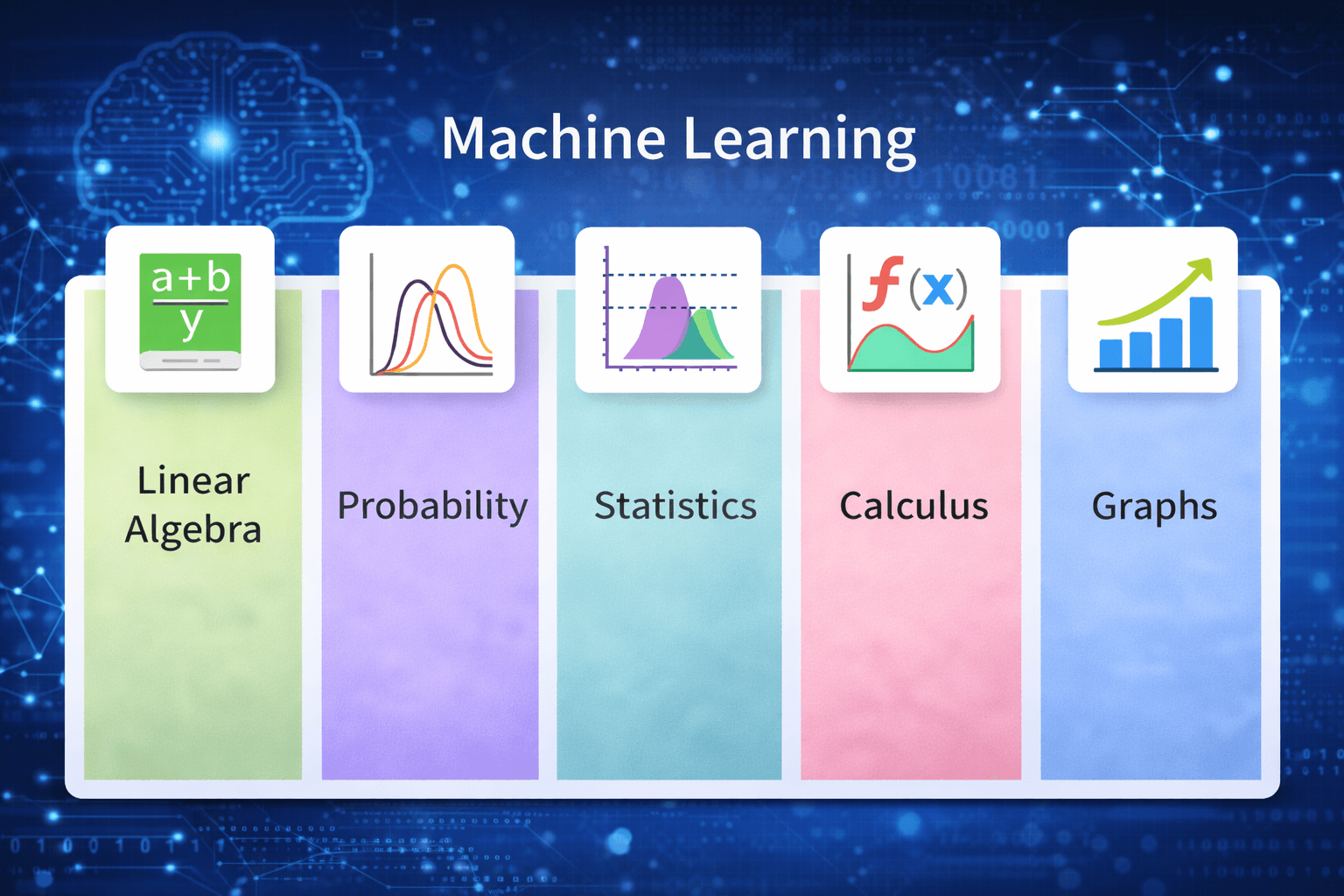
Logistic Regression is one of the most fundamental and widely used algorithms in the field of Machine Learning. Despite its name containing "regression," it is primarily a classification algorithm used to predict the probability of a categorical dependent variable. Whether it's determining if an email is spam, predicting if a customer will churn, or diagnosing a medical condition, logistic regression is often the first algorithm data scientists turn to for binary classification problems.
What is Logistic Regression?
"Logistic Regression is a statistical method for analyzing a dataset in which there are one or more independent variables that determine an outcome. The outcome is measured with a dichotomous variable (in which there are only two possible outcomes)."
Unlike Linear Regression, which predicts a continuous value (like house prices or temperature), Logistic Regression predicts a probability that falls between 0 and 1. This probability is then mapped to a discrete class (e.g., Yes/No, True/False, 0/1).
For example, instead of predicting the exact amount of rain (Linear Regression), Logistic Regression would predict the probability of it raining today (e.g., 0.85 or 85%). If the probability is above a certain threshold (usually 0.5), we classify the outcome as "Rain"; otherwise, "No Rain".
The Sigmoid Function
At the heart of Logistic Regression lies the Sigmoid Function (also known as the Logistic Function). This mathematical function takes any real-valued number and maps it into a value between 0 and 1.
S(z) = 1 / (1 + e-z)
Where 'e' is Euler's number (~2.718) and 'z' is the input value.
- If z goes to positive infinity, S(z) approaches 1.
- If z goes to negative infinity, S(z) approaches 0.
- If z is 0, S(z) is exactly 0.5.
This S-shaped curve is what allows Logistic Regression to handle outliers better than linear regression when used for classification, as it squashes the output to a valid probability range.
Linear Combination of Features
Before applying the Sigmoid function, Logistic Regression computes a weighted sum of the input features, similar to Linear Regression. This is the "z" value in the Sigmoid formula.
z = w0 + w1x1 + w2x2 + ... + wnxn
Here, x represents the input features (e.g., age, income, credit score), and w represents the weights (coefficients) learned by the model during training. The bias term is w0. The model learns the optimal weights that best separate the classes.
Types of Logistic Regression
1. Binary
The target variable has only two possible outcomes.
Examples: Spam vs. Not Spam, Churn vs. Retain, Pass vs. Fail.
2. Multinomial
The target variable has three or more nominal categories (unordered).
Examples: Predicting animal type (Cat, Dog, Lion), Cuisine type (Italian, Mexican, Indian).
3. Ordinal
The target variable has three or more ordinal categories (ordered).
Examples: Movie ratings (1-5 stars), Product size (Small, Medium, Large).
Industry Applications
Healthcare
Predicting the likelihood of a patient developing a disease (e.g., diabetes or heart disease) based on factors like age, BMI, and blood pressure.
Finance
Credit scoring models use logistic regression to predict the probability of a borrower defaulting on a loan.
Marketing
Predicting whether a user will click on an ad (Click-Through Rate prediction) or if a customer will purchase a product.
Advantages and Limitations
Advantages
- Simple and easy to implement.
- Highly interpretable (weights show feature importance).
- Efficient to train computationally.
- Provides probability scores, not just classes.
- Less prone to overfitting in low-dimensional datasets.
Limitations
- Assumes a linear relationship between log-odds and features.
- Can overfit if the number of features is greater than observations.
- Not suitable for complex, non-linear problems (without feature engineering).
- Sensitive to outliers (though less than linear regression).
Conclusion
Logistic Regression remains a cornerstone of machine learning. Its simplicity, interpretability, and effectiveness in binary classification tasks make it an essential tool in any data scientist's toolkit. While more complex algorithms like Random Forests and Neural Networks exist, Logistic Regression often serves as the perfect baseline model and is surprisingly effective for many real-world problems.
Frequently Asked Questions
Common Questions About Logistic Regression